


- Summary
- 1. Why Chongqing Is Ideal for First-Time Visitors
- 2. Best Places to Visit in Chongqing for First-Time Travelers
- 3. Recommended Day Trip to the Dazu Rock Carvings
- 4. How to Plan a Day in Chongqing for First-Time Visitors
- 5. What International Visitors Should Know Before Visiting Chongqing
- 6. FAQ: Five Common Questions from International Visitors
- 6.1. Are international credit cards and cash enough in Chongqing?
- 6.2. Can I travel independently in Chongqing if I don’t speak Chinese?
- 6.3. Are Chongqing’s subway and cable car easy to use?
- 6.4. When is the best time to visit Chongqing?
- 6.5. Can I still enjoy Chongqing cuisine if I can’t handle spicy food?
- 7. Conclusion
- 8.Chongqing First-Time Visitor Guide — All in One Table
- Recommended reading:
Summary
For first-time visitors to Chongqing (重庆), the most rewarding way to explore the city isn’t to cram in as many attractions as possible. It is to understand the rivers, mountains, bridges, and skyscrapers that shape daily life here.
This guide covers the best places to visit in Chongqing for first-time travelers, starting with the Yuzhong Peninsula (渝中半岛) and ending with the Dazu Rock Carvings (大足石刻). The suggested route combines city views, public transit, historic streets, and a UNESCO World Heritage site.
You will also find practical details on things to do, transportation, opening hours, ticket prices, and photography. Because navigation in Chongqing can be affected by elevation changes, a guided tour is often easier than traveling independently.
Contact our customer service through WhatsApp or email to receive a tailored itinerary based on your group size, arrival date, and hotel location.
1. Why Chongqing Is Ideal for First-Time Visitors
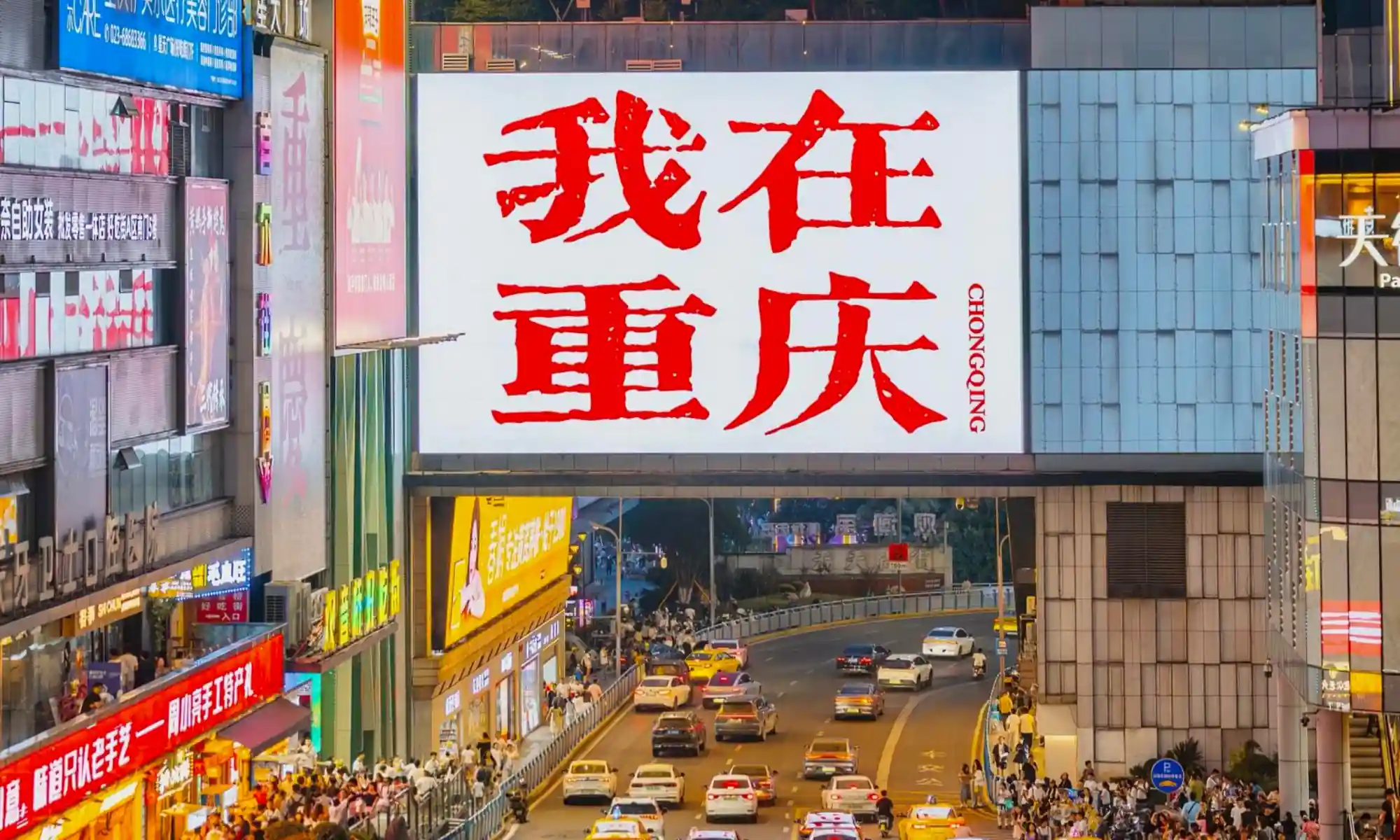
Chongqing (重庆) is a city built across hillsides. Roads, buildings, subway stations, and observation decks often sit at different levels. You may enter a shopping mall on the first floor and exit onto the street from the eighth floor on the opposite side. This multi-dimensional layout is part of the city’s character.
Chongqing lies at the meeting point of the Yangtze River (长江) and the Jialing River (嘉陵江). By day, you can see steep stairways, river bridges, and layered buildings. At night, brightly lit towers reflect on the water.
On a first trip, there is no need to rush through every attraction. Try one river crossing, watch the light rail pass through a building, and enjoy the skyline from a high vantage point or bridge. These experiences create a clear and memorable impression of the city.
1.1. Where to Start on Your First Visit
Start with the Yuzhong Peninsula (渝中半岛). This area connects Jiefangbei (解放碑), Hongyadong (洪崖洞), and the Yangtze River Cable Car (长江索道). The attractions are relatively close and reachable by subway.
Stay near Jiefangbei (解放碑), Jiaochangkou (较场口), or Lianglukou (两路口) if possible. Jiefangbei works well for daytime sightseeing and evening access to Hongyadong. Lianglukou and Jiaochangkou also offer convenient subway transfers.
1.2. What to Prepare for a Trip to Chongqing
Chongqing has many stairways and steep streets, so walking can feel harder than in most cities. Comfortable sneakers are better than high heels. Navigation apps are useful, but a listed “5-minute walk” may not include uphill climbs or changes in floor level.
Carry mobile payment options, an international card, and a small amount of Chinese yuan. Large malls and chain stores usually support electronic payment, while small shops, taxis, and businesses near tourist areas may prefer cash. Keep your hotel’s Chinese address, a copy of your passport, and emergency contact details with you.
1.3. Why Group Tours Are Better Than Independent Travel for First-Time Visitors
Chongqing’s roads can be confusing, and some building entrances are located on different levels. Popular attractions may also involve queues. For first-time foreign visitors, a guided tour reduces the stress of finding the right route, buying tickets, making reservations, and communicating in Chinese.
As a licensed Chongqing Travel Agency, we arrange transportation, guides, sightseeing, and meals around your needs. To receive a detailed itinerary with pricing, transport, guide service, and pickup and drop-off points, contact our customer service through WhatsApp or email.
2. Best Places to Visit in Chongqing for First-Time Travelers
This section focuses on five city attractions: Jiefangbei (解放碑), Hongyadong (洪崖洞), the Yangtze River Cable Car (长江索道), Liziba (李子坝), and Ciqikou (磁器口). Together, they represent the city center, night scenery, river crossing, elevated railway, and old-town atmosphere.
You can spread these attractions across one and a half or two days. With only one day, give priority to Jiefangbei (解放碑), Hongyadong (洪崖洞), and the Yangtze River Cable Car (长江索道). Specific route ideas appear later in this guide.
2.1. Jiefangbei: Start in the City Center
Jiefangbei (解放碑) is one of Chongqing’s most recognizable downtown landmarks. It is a historic monument rather than a museum, and it is a useful place to begin exploring the city’s streets and commercial districts.
Tips for foreign visitors: Arrive in the morning to photograph the monument and surrounding skyscrapers. Then rest at a nearby café before walking toward Hongyadong (洪崖洞). The area also has many shopping centers, restaurants, and subway stations, which makes it a convenient meeting point.
How to get there: Xiaoshizi Station (小什字站) on subway lines 1 and 6, and Linjiangmen Station (临江门站) on line 2, are all nearby. From Jiangbei International Airport (江北国际机场), you can take the subway or book a private transfer. Check the latest transit announcements and route maps before you travel.
Opening hours, admission, and photography: The surrounding pedestrian area is open to the public free of charge and generally accessible throughout the day. Shopping centers and restaurants keep their own business hours. For photos, shoot the monument straight on from a low angle. Include the surrounding high-rise buildings to show the city’s layered design.
Practical tips: Weekday mornings are usually quieter. Weekends and holidays can be crowded, so keep personal belongings secure.

2.2. Hongyadong: Prioritize the Night Views
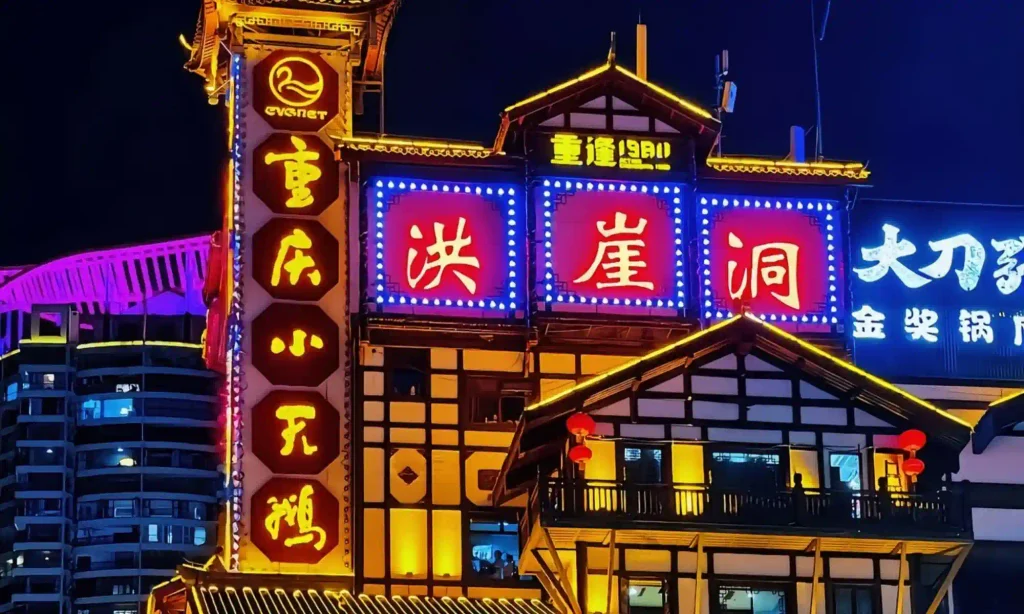
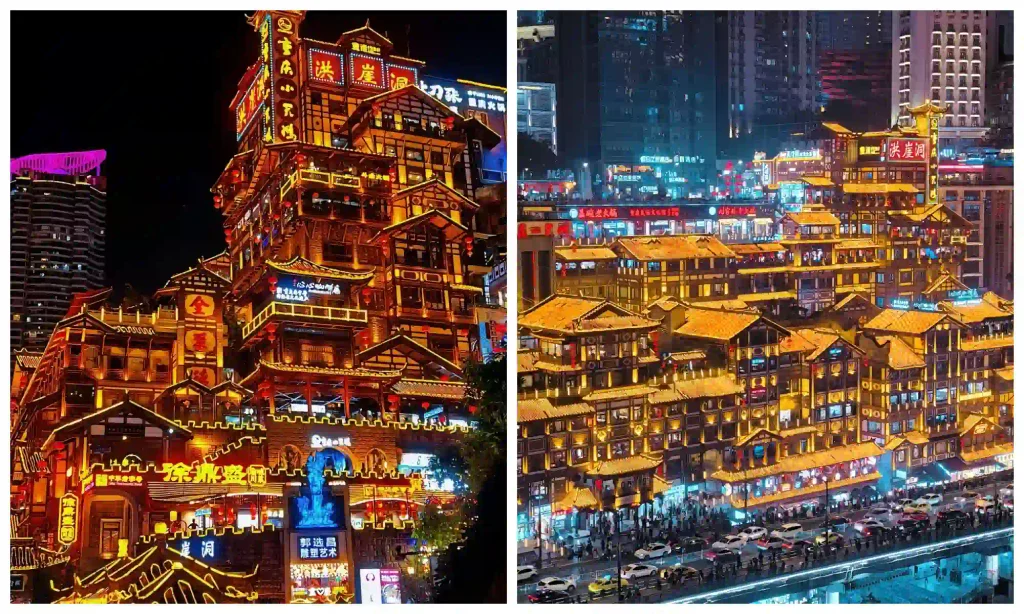
Hongyadong (洪崖洞) is built into the hillside and designed to resemble traditional stilted buildings. Its architecture is worth seeing by day, but the illuminated facade and river reflections make the night view especially popular.
Tips for foreign visitors: Walk to Hongyadong from the Jiefangbei (解放碑) area if you are comfortable with slopes and stairways. Enter from a higher floor, then make your way down toward the river. First-time visitors do not need to explore every floor. Focus on the viewing areas, the riverside, and a local restaurant.
How to get there: Hongyadong is within walking distance of Jiefangbei. Xiaoshizi Station (小什字站) and Linjiangmen Station (临江门站) are common starting points. Because some entrances are on different levels, your navigation app may appear inaccurate. Ask nearby shop staff or subway workers for directions if needed.
Hours, admission, and photography: The site is typically open from 9:00 a.m. to 11:00 p.m., and entry is free. Reservation requirements and capacity controls can change, so check the official Hongyadong channels before your visit. For full views, use the Qiansimen Bridge (千厮门大桥) or the designated Jiangbei viewing area. Never enter traffic lanes or block emergency access.
Practical tips: Queues can be long during busy periods. Advance reservations and a well-timed arrival make the experience easier.
2.3. Yangtze River Cable Car: Cross the River
The Yangtze River Cable Car (长江索道) links Yuzhong District (渝中区) and Nan’an District (南岸区). It was originally a form of public transport and is now one of Chongqing’s most recognizable experiences. From the cabin, you can see the river, bridges, and buildings on both banks.
Tips for foreign visitors: Buy a one-way ticket from the north station in Yuzhong to the south station in Nan’an. After crossing, explore the riverside or Longmenhao Old Street (龙门浩老街). Return to the city center by taxi or public transit. Riding the cable car twice is not necessary.
How to get there: The north station is close to Jiefangbei (解放碑) and Xinhua Road (新华路). The south station is near Shangxin Street (上新街). From Jiefangbei, you can walk, take a taxi, or use public transport. Confirm exits and walking routes on the day of travel.
Hours and tickets: A one-way ticket usually costs 30 yuan, while a round trip is 50 yuan. Operating hours change by season and holiday, with services commonly running from 8:00 a.m. to 9:00 p.m. or 10:00 p.m. Check the official Chongqing Cable Car channels for the latest fares and schedules.
Best spots for photos: Choose a window seat facing the river. The middle section of the crossing offers the clearest views of the water and bridges. Do not lean against the glass, and avoid using flash so other passengers are not disturbed.

2.4. Liziba: Photograph the Train Passing Through a Building
Liziba (李子坝) is known for a monorail track that passes through a residential building. The train does not merely pass next to the structure; part of the building surrounds the track. An observation deck outside the station provides a safe place to take photos.
Tips for international visitors: Ride subway line 2 to Liziba (李子坝) for the experience of entering the building, or wait on the external viewing platform for photos. Twenty to thirty minutes is usually enough.
How to get there: Subway line 2 stops at Liziba. Travel from Jiefangbei (解放碑) requires transfers, so review the latest metro map before you set out. Train frequency can change, and third-party timetables may not be reliable.
Hours, admission, and photography: The observation deck is usually free to enter. Subway tickets follow the standard fare system. The front of the platform is the best place to photograph the train entering and leaving the building. Stay behind safety barriers and avoid standing in the road.
Practical tips: Eling No. 2 Factory (鹅岭二厂) is also nearby, but the route includes slopes. Visitors carrying heavy luggage should allow extra time.

2.5. Ciqikou: Experience the Old Street and Local Life
Ciqikou (磁器口) is a historic district close to central Chongqing. The main street has cobblestone paths, traditional architecture, teahouses, snack stalls, and handicraft shops. It offers a slower contrast to the city’s modern skyline.
Tips for foreign visitors: Visit in the morning. Walk from the main street toward the Jialing River (嘉陵江), explore a side alley, and finish at a teahouse. This is a good place for a relaxed walk, people-watching, and sampling small portions of local food. Expensive souvenirs are not necessary.
How to get there: Ciqikou Station (磁器口站) on subway line 1 is close to the old town. Travel from Jiefangbei (解放碑) usually requires a transfer. Confirm directions, stops, and travel times with the latest route map.
Opening hours, admission, and photography: The public streets are generally free to enter. Some small exhibition halls or activities may charge separate fees. Good subjects include the stone paths, tiled eaves, red lanterns, and riverside views. Ask before photographing local people.
Practical tips: The main street becomes crowded on weekends and holidays. A weekday morning or a walk through the quieter side alleys can feel more comfortable.

3. Recommended Day Trip to the Dazu Rock Carvings
The best places to visit in Chongqing for first-time travelers are not limited to the city center. If you have a full day, add the Dazu Rock Carvings (大足石刻) to your itinerary.
Wulong (武隆) also has dramatic scenery, but it requires a longer drive from downtown Chongqing and involves more walking and stairs. Gele Mountain (歌乐山) and Ciqikou (磁器口) are closer together and can suit a half-day trip, but their historical background is more difficult to understand without preparation.
The Dazu Rock Carvings offer a concentrated cultural experience and better opportunities for English-language explanation.
3.1. How to Explore the Dazu Rock Carvings
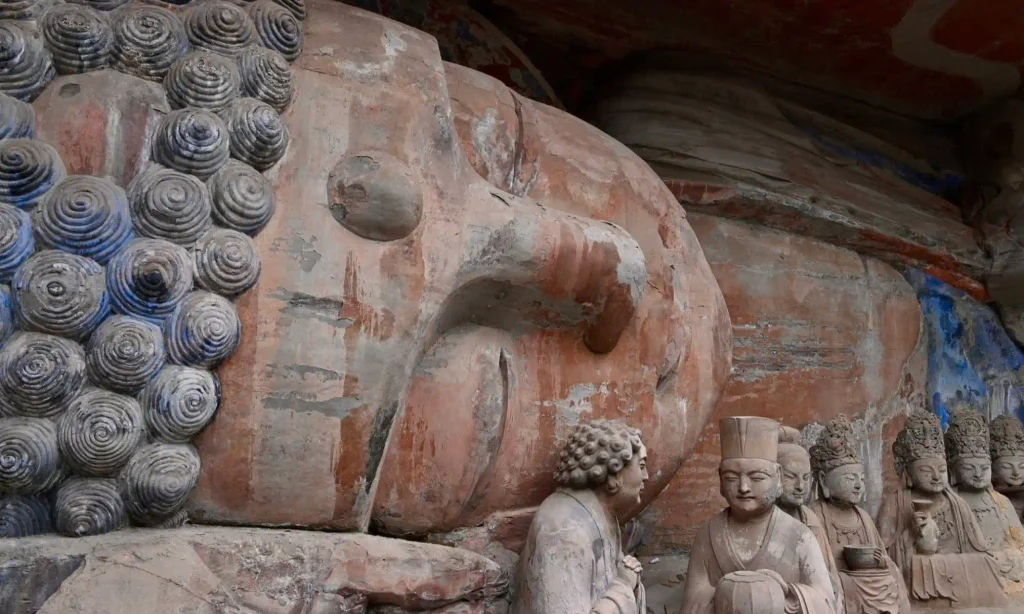
The Dazu Rock Carvings (大足石刻) are a UNESCO World Heritage Site featuring cliff-side sculptures from the Tang (唐) and Song (宋) dynasties. For first-time visitors, Baoding Mountain (宝顶山) should be the main priority. Its carvings are concentrated and easier to appreciate in a single visit.
Allow two to three hours on site. Begin with the major sculptures, then use a guide to understand the Buddhist stories and artistic details. An audio guide or live commentary in English can make a noticeable difference.
3.2. How to Get to the Dazu Rock Carvings
High-speed trains run from central Chongqing to Dazu South Station (大足南站). The trip commonly takes 30 to 40 minutes. Train numbers, departure stations, fares, and schedules change daily, so check the official China Railway ticketing platform before you book.
After arriving at Dazu South Station, you still need a road transfer to Baoding Mountain (宝顶山). Travel time depends on road conditions, bus schedules, and visitor demand. A private vehicle reduces transfers but can still be affected by highway or urban traffic.
3.3. Opening Hours, Admission, and Photography
Baoding Mountain (宝顶山) commonly opens from 8:30 a.m. to 6:00 p.m., with last admission earlier than the closing time. Standard adult admission is around 110 yuan, while a combined ticket for Baoding Mountain and Beishan (北山) is around 135 yuan.
These details may change with the season or official policy and are intended only for budget planning.
Use designated viewpoints for photography. Do not photograph areas where signs prohibit it. Flash can damage delicate stone surfaces, and touching the carvings is not permitted. Keep noise to a minimum in religious and historic areas.
3.4. Why Joining a Group Tour Is Recommended Even for Suburban Day Trips
A day trip to the Dazu Rock Carvings (大足石刻) involves train tickets, road transfers, scenic-area reservations, and guide arrangements. For first-time foreign travelers, a guided tour is usually simpler than independent travel.
Groups can be organized around your arrival date and may include private transport and a Chinese-speaking guide. Advance arrangements for an English-speaking guide are also possible. Contact customer service through WhatsApp or email for a detailed itinerary, quotation, meeting time, and ticket information.
4. How to Plan a Day in Chongqing for First-Time Visitors
Chongqing’s attractions may look close on a map while still requiring uphill or downhill walks and multiple transfers. Leave enough time between stops and avoid overpacking the day.
4.1. Recommended Order for a Day in the City Center
Follow this sequence: Jiefangbei (解放碑), Hongyadong (洪崖洞), the Yangtze River Cable Car (长江索道), Liziba (李子坝), and Ciqikou (磁器口).
Begin at Jiefangbei in the morning, then walk to Hongyadong. Have lunch nearby. In the afternoon, cross the river by cable car, return to central Chongqing, and continue to Liziba. End the day at Ciqikou. This sequence limits backtracking but still makes for a full day.
4.2. If You Can Only Choose Three Attractions
With limited time, choose Jiefangbei (解放碑), Hongyadong (洪崖洞), and the Yangtze River Cable Car (长江索道).
Jiefangbei introduces the city, Hongyadong offers the classic night view, and the cable car provides a short but memorable river crossing. Together, they represent the core of a first visit.
4.3. How Guided Tours Can Help
A guided tour handles tickets, reservations, transport, commentary, and meals in advance. The guide can also assist at complex transit points, cable car stations, and crowded attractions.
For first-time foreign visitors, a guided tour is often easier than independent travel. When contacting customer service, provide your group size, arrival time, hotel address, and whether you need an English-speaking guide. The team will then recommend a suitable itinerary.
5. What International Visitors Should Know Before Visiting Chongqing
Weather, queues, and road traffic can all affect your experience in Chongqing. Basic preparation makes the trip easier and more comfortable.
5.1. Payments and Language
Mobile payments are common, but not every merchant accepts international cards. Larger malls and chain stores are more likely to support international payment methods. Smaller shops, taxis, and vendors near tourist areas may prefer cash.
Carry some Chinese yuan and an international card. Subway signs and ordering machines are mainly in Chinese, with limited English. A guided tour can reduce language pressure, especially at ticket counters and transit stations.
5.2. Best Time to Visit Chongqing
Spring and autumn are generally the most comfortable seasons. Summer can be hot and humid, while winter is often cloudy. Bring sunscreen, drink enough water, and carry a light raincoat.
Attractions are busiest during Chinese public holidays. Book hotels, popular experiences, and suburban day trips in advance. Confirm weather and crowd information through official channels before traveling.
5.3. Can You Enjoy Chongqing Cuisine If You Can’t Handle Spicy Food?
Yes. Chongqing food is famous for its heat, but milder options are widely available. Look for clear broth, tomato soup, mushroom soup, steamed dishes, and light stir-fries.
When ordering, say: “No spice, please.” For hot pot, choose a yuan-yang (鸳鸯) split pot or a clear broth. Start with a small portion to test your tolerance. There is no need to order the spiciest option on your first visit.
5.4. How to Confirm Travel Information
Opening hours, ticket prices, reservation rules, and transport schedules can change. The information in this article is intended to help with planning and should not replace official notices.
Before departure, reconfirm cable car services, Hongyadong reservation requirements, and suburban transport arrangements. Tour operators may also adjust plans because of weather, road conditions, or official notices.
6. FAQ: Five Common Questions from International Visitors
6.1. Are international credit cards and cash enough in Chongqing?
Mobile payment is very common, but international cards are not accepted everywhere. Larger stores are more likely to support them. Smaller shops, taxis, and tourist-area vendors may only accept Chinese mobile payment or cash.
Carry an international card, a small amount of yuan, and ask your hotel or travel advisor which purchases are most likely to require cash.
6.2. Can I travel independently in Chongqing if I don’t speak Chinese?
Yes, but it can be challenging. Subway signs, station announcements, and some ordering machines are mainly in Chinese. Language barriers can also appear when booking Hongyadong, buying cable car tickets, or arranging taxis. A guided tour can reduce these issues. You can also ask customer service through WhatsApp or email for Chinese-English reference information covering meeting points, driver details, and daily plans.
6.3. Are Chongqing’s subway and cable car easy to use?
The subway connects Jiefangbei (解放碑), Liziba (李子坝), Ciqikou (磁器口), and areas near Hongyadong (洪崖洞). It is usually more reliable than a taxi during heavy traffic. Ticket apps, ride codes, and foreign card setup can vary, so station staff can help if needed. The Yangtze River Cable Car normally costs 30 yuan one way and 50 yuan round trip. Operating hours vary by season and holiday, so check official announcements before you go.
6.4. When is the best time to visit Chongqing?
Spring and autumn are usually best. Summers can be hot and humid, while winters are often overcast. If your schedule allows, avoid Chinese public holidays for a more comfortable experience at major attractions. Book accommodation, transfers, and popular tickets early when holidays fall on your travel dates.
6.5. Can I still enjoy Chongqing cuisine if I can’t handle spicy food?
Yes. Many restaurants offer clear broth, tomato broth, mushroom broth, steamed dishes, and mild stir-fries. Tell the server “No spice, please.” At a hot pot restaurant, order a split pot or clear broth and eat slowly. Not every local dish is heavily spiced.
7. Conclusion
Chongqing’s appeal comes from the way its rivers, mountains, bridges, and buildings fit together. A first trip does not need to include every attraction. Jiefangbei (解放碑), Hongyadong (洪崖洞), the Yangtze River Cable Car (长江索道), Liziba (李子坝), Ciqikou (磁器口), and the Dazu Rock Carvings (大足石刻) are enough to create a varied and memorable visit.
The best places to visit in Chongqing for first-time travelers balance classic city landmarks with cultural heritage. Each attraction has its own transportation options, opening arrangements, ticket rules, and photography opportunities. Letting a professional team manage reservations, transfers, and guiding is usually easier than planning everything independently.
If you would like to avoid navigation problems, ticket queues, and language barriers, contact our customer service through WhatsApp or email. Share your travel dates, group size, hotel location, and personal interests. Our team will prepare a clear itinerary and quotation.
8.Chongqing First-Time Visitor Guide — All in One Table
| No. | Attraction / Topic | Highlights | Tips for Foreign Visitors | Transportation | Opening Hours | Tickets | Photography Tips | Practical Notes |
|---|---|---|---|---|---|---|---|---|
| 0 | Why Chongqing | “City built on hillsides” at the confluence of Yangtze & Jialing Rivers; day = terraced steps & bridges, night = lights & reflections | Focus on one river crossing, watching light rail through a building, and a night view from a high vantage point | Base yourself on Yuzhong Peninsula | All day | Free to explore the city | Upward angle shots include surrounding high-rises | Wear sneakers; navigation may not show uphill/climbing floors |
| 1 | Jiefangbei (Liberation Monument) | Most recognisable downtown landmark & historic monument | Morning photos + café, then walk to Hongyadong; good meeting point | Metro L1/6 Xiaoshizi, L2 Linjiangmen; airport by metro or ride-hailing | Public area open all day; malls keep own hours | Free | Front-on, upward angle with high-rises | Weekday mornings less crowded; beware of crowds on weekends |
| 2 | Hongyadong | Mountainside stilt-house architecture; iconic Chongqing night view | Walk from Jiefangbei; enter from a higher floor and go down to the river; focus on decks, riverside & restaurants | Walking distance from Jiefangbei; Xiaoshizi/Linjiangmen metro | Typically 9:00 a.m. – 11:00 p.m. | Free; check official WeChat for reservations/capacity | Panoramic shots from Qiansimen Bridge / Jiangbei Safe Viewing Area | Long queues in peak season; entrance may be on different floors — ask locals |
| 3 | Yangtze River Cable Car | Crosses the Yangtze, connecting Yuzhong & Nan’an; classic river experience | One-way Yuzhong→Nan’an, then explore riverside/Longmenhao Old Street; return by taxi/transit | North Station near Jiefangbei & Xinhua Rd; South Station near Shangxin Street | 8:00 a.m. – 9:00/10:00 p.m.; varies by season/holidays | One-way 30 RMB; round trip 50 RMB | Window seat facing the river; best views mid-crossing | Avoid pressing on glass; no flash |
| 4 | Liziba (Train Through Building) | Monorail passing through a residential building; observation deck outside | Take L2 to feel the train enter, or shoot from the outside deck; 20–30 min is enough | Metro Line 2; transfer from Jiefangbei | Observation deck usually free | Free; metro ticket as usual | Directly in front of the deck as train enters/exits | Can also visit Eling No.2 Factory; slopes in between |
| 5 | Ciqikou Ancient Town | Cobblestone lanes, teahouses, snacks, handicrafts — local daily life | Morning visit: main street → Jialing riverbank → side alley → teahouse | Metro Line 1 Ciqikou Station; transfer from Jiefangbei | Streets generally free to enter | Free; some small halls/activities charge separately | Stone paths, eaves, red lanterns, river views | Crowded weekends/holidays; ask before photographing people |
| 6 | Dazu Rock Carvings (day trip) | UNESCO site, Tang/Song cliff carvings; Baoding Mountain priority | Allow 2–3 hours with a guide; English audio/live commentary highly recommended | High-speed train to Dazu South (30–40 min), then bus to Baoding; agency shuttle reduces transfers | Baoding Mountain ~8:30 a.m. – 6:00 p.m. | Baoding ~110 RMB; Baoding+Beishan ~135 RMB | Only in designated areas; no flash; do not touch statues | Involves rail + transfer + reservations; a group tour is easiest |
| 7 | Full-day city itinerary | Jiefangbei → Hongyadong → Cable Car → Liziba → Ciqikou | Minimises backtracking but still a packed day | — | — | — | — | Map-distance ≠ actual walking (uphill/changing levels) |
| 8 | If only 3 attractions | Jiefangbei + Hongyadong + Cable Car | Covers city intro, night view & unique river crossing | — | — | — | — | Best intro to Chongqing’s multi-dimensional city |
| 9 | Payments & language | Mobile payment common; metro signs mainly in Chinese | Carry intl card + some RMB cash; a guide helps with the language barrier | — | — | — | — | Large malls take intl cards; small shops/taxis may prefer cash |
| 10 | Best time to visit | Spring & autumn most comfortable | Avoid Chinese public holidays for a better experience | — | — | — | — | Summer hot/humid; winter overcast; bring sunscreen, water, light raincoat |
| 11 | Can’t handle spice? | Clear broth, tomato/mushroom soup, steamed dishes, mild stir-fries | Say “No spice, please”; hot pot choose yuan-yang or clear broth | — | — | — | — | Start mild — don’t rush the spiciest broth |
| 12 | Group tour advantage | Tickets, reservations, transport, guiding & meals handled in advance | Specify group size, arrival date, hotel address, English-guide need | Custom pickup/drop-off available | — | — | — | Smoother than independent travel for first-time visitors |
Recommended reading:
Things to Do in Chongqing: 15 Must-See Attractions and Experiences

2 Comments
[…] Best Places to Visit in Chongqing for First-Time Travelers […]
[…] Best Places to Visit in Chongqing for First-Time Travelers […]